
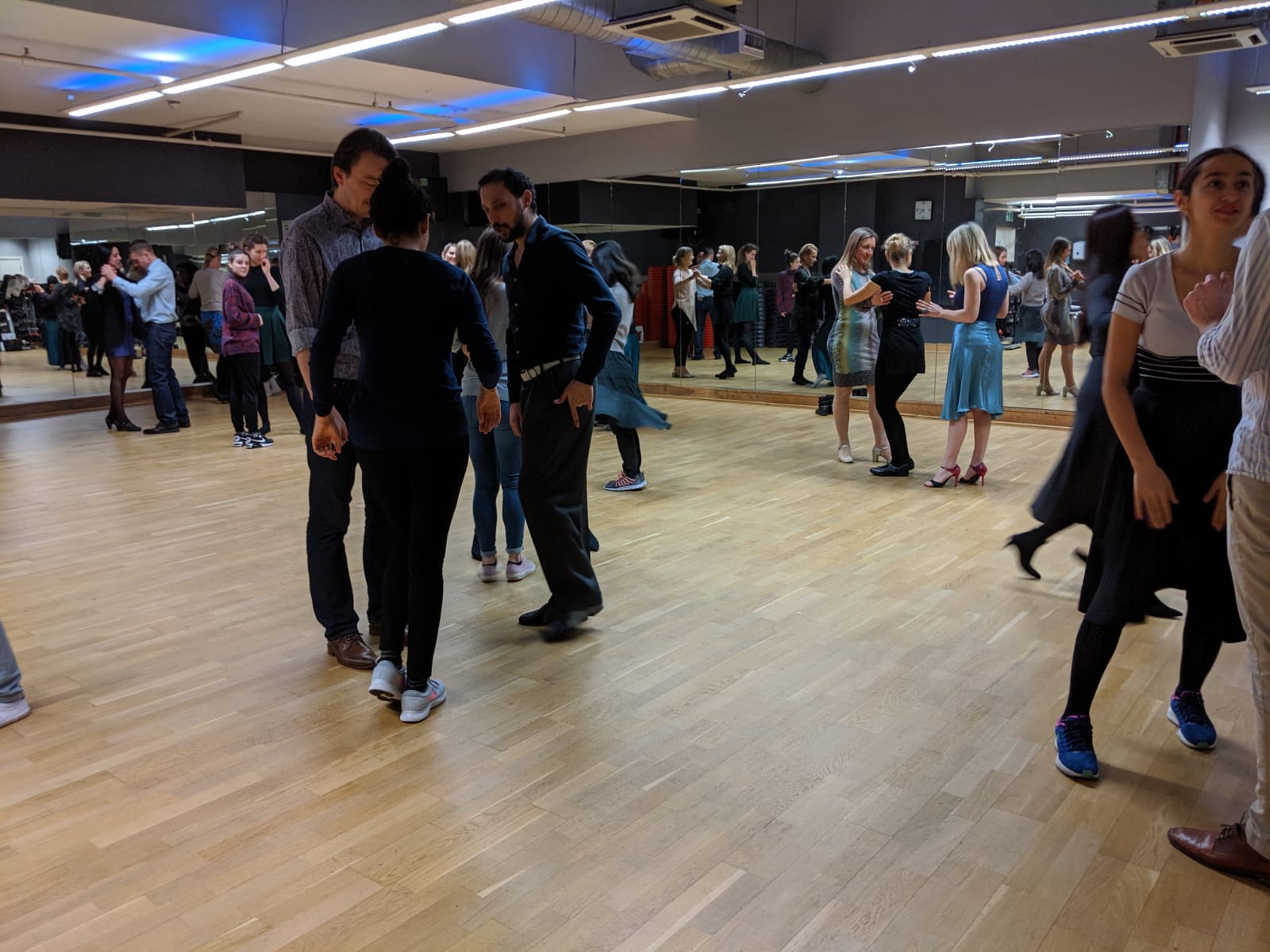
A student said to me in class the other day that it was good to come back to the fundamentals. She meant it kindly. She also meant something like: nice to revisit the easy part before we get on with the real material.
That is the whole misunderstanding, in one sentence.
The word did the damage
Somewhere along the way fundamentals became a synonym for basics, and basics became a synonym for beginner. A stage. Something you pass through and leave behind, like a driving test.
But the fundamentals of tango are not the start of the dance. They are the dance. The walk, the change of weight, the ocho — that is not the entrance hall you cross on the way somewhere better. That is the building.
Some fundamentals cannot be taught early
Here is the part that tends to surprise people. There are fundamentals we simply cannot teach a beginner — and not because we are holding anything back, and not because the material is complicated. It isn't complicated at all.
It is because they cannot perceive it yet.
You cannot work on the quality of a change of weight with someone who does not yet feel their own axis. You can say the words. They will hear the words. Nothing will land — in the way you can point out a chord to somebody who has never listened for harmony, and they will still hear only “music”. The information is not hidden from them. It is inaudible.
That perception gets built slowly, by dancing. Which is why a class on the walk for experienced dancers is not a remedial class. It is the only class in which that walk can actually be discussed.
Take the change of weight
It helps to be concrete, because “there is more in it than you think” is easy to say and easy to ignore. So take the change of weight — about as basic as tango gets.
At first the work is only to make it happen: two feet, one axis, arrive somewhere and stay there. Then it stops being whether it happens and becomes when — where it sits in the phrase, whether it lands with the music or leans against it. Then whether to finish it at all, because a change of weight left deliberately incomplete is not a mistake; it is a question you leave open, and your partner can answer it.
And it keeps going. How you push the floor in order to change. Whether that contact with the floor survives the journey upward or gets lost on the way, because the hip gives out. How what arrives at the top is projected into your partner, and in what shape, so that they know where your weight is without being told.
We could keep going. That is rather the point: there is no bottom to it.
But notice the order. You cannot work on redirecting pressure through the chest with someone who does not yet push the floor, or who does not know that the hip is not supposed to collapse. Not because that idea is too advanced to say out loud — we just said it in one sentence — but because it rests on something that is not there yet.
That is what makes a fundamental advanced material. Not difficulty. Dependency.
Why classes drift towards figures anyway
There is an honest reason teachers reach for sequences, and it is not laziness. A figure is visible. It can be demonstrated from the front of the room, copied, and taken home. Everyone can see whether it happened.
A change of weight looks like nothing at all. It is felt, not seen, which makes it harder to teach, harder to demonstrate and much harder to sell. So the market drifts towards what shows — and the dancing does not improve, because the thing that would improve it was never on the table.
So what does “advanced” mean?
Not a longer list of steps. Advanced is noticing more: the same walk, at a resolution that was not available to you two years ago.
Which is why the dancers we admire are not the ones who ran out of basics. They are the ones who never believed there was such a thing.
Back from where?
This is the reasoning behind the structure of movement in how we teach: steps are the words and the elements are the letters, and you cannot write a clear sentence with letters you have never really looked at.
So when someone says it is good to go back to the fundamentals, the kind answer is: back from where? We keep returning to the same small set of things because they are not small. We just could not see them yet.